The National Network Opposing the Militarization of Youth (NNOMY) is a network of organizations that stand up against the militarization of schools and young people in the USA. NNOMY

Featured

Refusing Endless War Through Youth Power and Community Roots

  español

March 30, 2026 / NNOMY staff / The National Network Opposing the Militarization of Youth (NNOMY) - A mind stops accepting endless war when young people begin to see themselves not as spectators to global violence, but as builders of something better. This shift rarely begins in policy debates or news cycles. It begins in neighborhoods, school hallways, community centers, and the informal networks where youth learn what is possible. For many, the first awakening comes from realizing that the stories they’ve been handed about war—its inevitability, its heroism, its supposed necessity—are not natural laws but narratives designed to shape their choices.

Young people encounter militarized messages earlier and more intensely than most adults realize. Recruiters appear in classrooms, cafeterias, and career fairs. Movies and games frame conflict as adventure. Political rhetoric paints the world as a series of threats. These messages work not because they are persuasive, but because they are constant. They create a sense that war is simply the backdrop of modern life. Youth organizing disrupts that backdrop. It gives young people a place to question the script and to see themselves as protagonists in a different story.

Community spaces play a crucial role in this transformation. A youth council meeting in a library basement, a creative content team filming a short video on a borrowed camera, a peer educator training held after school—these are the places where the idea of endless war begins to lose its grip. In these rooms, young people talk openly about the pressures they face, the futures they want, and the systems that try to shape their decisions. They learn that militarism is not just about armies; it is about the way society teaches them to see danger everywhere, to equate safety with force, and to believe that violence is the only path to respect or opportunity.

Featured

A Detailed Report to NNOMY and the Counter‑Recruitment Community on the Impact of the Serve Act

The Landscape of Counter-recruitment in U.S. High Schools is About to Change

  español -

March 16, 2026 / NNOMY Staff / National Network Opposing the Militarization of Youth - The Serve Act arrives at a moment when the U.S. military faces one of the most significant recruitment shortfalls in decades, and federal policymakers have responded not by rethinking the underlying causes of youth disinterest in military service, but by intensifying access to young people’s personal information and expanding the military’s presence in schools. The bill represents a strategic pivot: rather than relying on traditional recruitment pipelines, it seeks to normalize military contact with students as early as possible, to frame enlistment as a civic expectation, and to reduce the ability of families and communities to shield young people from aggressive recruitment tactics. For the counter‑recruitment movement, this legislation is not simply another policy challenge but a structural escalation that demands coordinated, long‑term resistance.

At its core, the SERVE Act reframes military recruitment as a national security imperative that supersedes local control, parental authority, and student privacy. It strengthens federal pressure on school districts by tying compliance to funding streams and by redefining “equal access” to mean not merely allowing recruiters into schools but actively facilitating their outreach. This shift is subtle in language but sweeping in effect. Administrators who previously exercised discretion over recruiter visits now face heightened scrutiny, and districts that once limited military presence to career fairs or scheduled appointments may feel compelled to permit more frequent, less regulated interactions. The result is an environment in which military recruiters gain unprecedented legitimacy and visibility, while educators and counselors who attempt to maintain balance or protect student autonomy risk being portrayed as obstructing federal policy.

One of the most consequential aspects of the SERVE Act is its expansion of access to student directory information. Although federal law has long required schools to share certain categories of student data with military recruiters unless families opt out, the SERVE Act broadens the scope of what can be collected and increases the mechanisms through which it can be obtained. This includes provisions that encourage or require schools to streamline data‑sharing processes, reduce barriers to recruiter access, and integrate military outreach into digital platforms used by students. In practice, this means that young people who have never expressed interest in the military may find themselves contacted repeatedly, both in person and through digital channels, without having knowingly consented to such engagement. For communities already concerned about surveillance, data exploitation, and the erosion of privacy rights, the SERVE Act deepens existing vulnerabilities.

Featured

Statement Opposing the “Automatic” Registration of Individuals for a Possible Military Draft

  español -

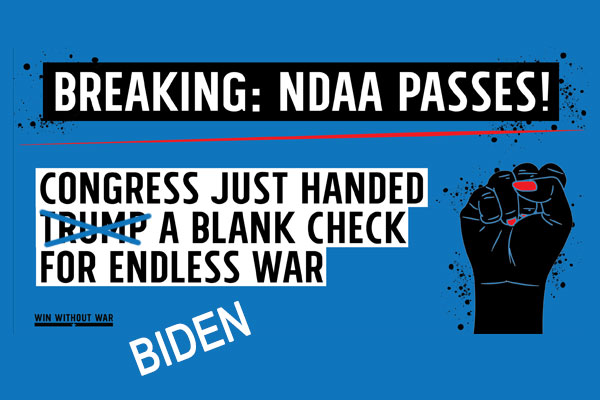
March 12, 2026 / Edward Hasbrouck / Antiwar.com - The organizations listed below oppose the recent change in federal law, buried in the 2026 National Defense Authorization Act, that will result in the Selective Service System (SSS) trying to “automatically” identify, locate, and register men ages 18 through 25 for a future draft.

“Automatic” registration won’t produce an accurate or complete list of potential draftees. But it will increase the likelihood of war and violate the privacy of U.S. citizens and residents. Once implemented, an automatic registration system will deny young men, including conscientious objectors, the opportunity to indicate their opposition to being drafted by opting out of registration.

This change in law was proposed by the SSS because the previous method of relying on men to register themselves with the SSS has, over time, resulted in tens of millions of young men failing to register or report changes of address. The failing record of the self-registration system was underscored when the SSS reported that in 2023 only 39.9 percent of men complied when they reached the mandatory registration age of 18.

While there currently is no active military draft, the SSS is tasked with maintaining the mechanism for one if it is authorized by Congress. Given threats and actions by the Trump administration to intervene militarily in an increasing number of places around the world, it is concerning that, at this time, steps are now being taken to grow the number of people who could be facing the threat of a future draft.

Furthermore, even before a draft is activated, the mere presence of a system to carry it out and enroll men to be involuntarily inducted can encourage politicians and military planners to feel overconfident in planning and carrying out larger and longer wars without having to worry about whether enough people would be willing to fight them. Thus, having a system for a draft in place reduces a critical guard rail for such decisions.

The new “automatic” registration law will give the SSS unprecedented authority, starting in December 2026, to acquire and aggregate information from any other federal database that might help identify or locate potential draftees. However, whether an individual is required to register depends on factors like their sex as assigned at birth and their immigration and visa status, information that could very well be absent from other federal data sources used by the SSS. Relying on such a wide breadth of federal data sources could, thus, make the SSS database inaccurate and vulnerable to misuse and weaponization, especially against transgender, nonbinary, and immigrant youth.

This potential for weaponization has been starkly demonstrated by recent efforts to grant the Department of State and U.S. Citizenship and Immigration Services access to the SSS database of registered individuals. The stated purpose for requesting this is to evaluate the eligibility of individuals for U.S. citizenship, but it could also be used to identify immigrants for potential deportation. If implemented, the personal information and privacy of all U.S. citizens and residents would be at risk.

The change to “automatic” registration was enacted with no hearings, no debate, and no budget review. There’s no reason to think that a list constructed from other databases compiled for entirely unrelated purposes will be any more fit for the purpose of provably delivering induction notices than the current “selfregistration” list.

In light of these facts, including the failure of the self-registration system, we are calling for Congress to end SSS registration and totally repeal the Military Selective Service Act, for which bi-partisan legislation has been introduced multiple times in the last few years (e.g., S.4881 in 2024 and H.R.2509 in 2022).

Lawmakers should act quickly on this issue before federal records are misused and the rights of young men are infringed in an ill-considered attempt to bolster the capacity of the U.S. for endless, unlimited wars.

Source: As U.S. Military Threats and Actions Escalate, Coalition Calls for Ending Preparations for a Military Draft - Antiwar.com Blog


 Statement signers (as of 3/12/26):

Featured

Statement from the Steering Committee of the National Network Opposing the Militarization of Youth Against the U.S. War with Iran

    español -

March 10, 2026 / NNOMY Steering Committee / The National Network Opposing the Militarization of Youth (NNOMY) - The National Network Opposing the Militarization of Youth (NNOMY) affirms its unequivocal opposition to the current war of the U.S. Trump Administration against the Republic of Iran. We hold that this conflict is illegal under international law and fails to meet the moral and ethical criteria established in just war theory, including just cause, legitimate authority, proportionality, and the exhaustion of non‑violent alternatives.

As an organization committed to protecting young people from the harms of militarism, we reject the notion that this war serves a lawful or justifiable purpose. Instead, it deepens cycles of violence, diverts essential resources from human needs, and exposes youth—both domestically and abroad—to preventable trauma and exploitation.

NNOMY calls for an immediate end to hostilities, renewed investment in diplomacy, and a national re-commitment to peaceful conflict resolution. We urge communities, educators, and policymakers to stand with us in resisting the normalization of war and the militarization of our society.


NNOMY Steering Committee:

Declaración del Comité Directivo de la Red Nacional Contra la Militarización de la Juventud Contra Estados Unidos.

    English -

10 de marzo de 2026 / Comité Directivo de NNOMY / Red Nacional de Oposición a la Militarización de la Juventud (NNOMY) - La Red Nacional de Oposición a la Militarización de la Juventud (NNOMY) afirma su oposición inequívoca a la actual guerra de la Administración Trump de Estados Unidos contra la República de Irán. Sostenemos que este conflicto es ilegal según el derecho internacional y no cumple con los criterios morales y éticos establecidos en la teoría de la guerra justa, incluida la causa justa, la autoridad legítima, la proporcionalidad y el agotamiento de las alternativas no violentas.

Como organización comprometida con proteger a los jóvenes de los daños del militarismo, rechazamos la noción de que esta guerra tenga un propósito legal o justificable. En cambio, profundiza los ciclos de violencia, desvía recursos esenciales de las necesidades humanas y expone a los jóvenes (tanto a nivel nacional como en el extranjero) a traumas y explotación evitables.

NNOMY pide el fin inmediato de las hostilidades, una inversión renovada en la diplomacia y un nuevo compromiso nacional con la resolución pacífica de conflictos. Instamos a las comunidades, educadores y formuladores de políticas a que nos apoyen en la resistencia a la normalización de la guerra y la militarización de nuestra sociedad.


Comité Directivo de NNOMY:

“What if I want to serve but don’t want to harm anyone?”

Short answer:

There are non‑military ways to serve that align with nonviolence.

Expanded:

Disaster response, medical training, environmental restoration, community safety programs, and international humanitarian work all allow young people to contribute without participating in armed conflict.


These paths often align more closely with long‑term human survival and ethical responsibility.

“Isn’t it disrespectful to question the military?”

Short answer:

Asking questions is an act of responsibility, not disrespect.


Expanded:

Democracies depend on informed citizens who can evaluate institutions critically.
Questioning military policy honors the lives of those who serve by ensuring their sacrifices are not taken lightly or used carelessly.

Subcategories

The NNOMY Opinion section is a new feature of our articles section. Writing on youth demilitarization issues is quite rare but we have discovered the beginning articles and notes being offered on this subject so we have decided to present them under an opinion category.  The articles presented do not necessarily reflect the views of the NNOMY Steering Committee.

General David Petraeus' rocky first days as a lecturer at the City University of New York Though the United States of America shares with other nations in a history of modern state militarism, the past 65 years following its consolidation as a world military power after World War II, has seen a shift away from previous democratic characterizations of the state.  The last thirty years, with the rise of the neo-conservative Reagan and Bush administrations (2), began the abandonment of moral justifications for democracy building replaced by  bellicose proclamations of the need and right to move towards a national project of global security by preemptive military force .

In the process of global military expansion, the US population has been subjected to an internal re-education to accept the role of the U.S. as consolidating its hegemonic rule internationally in the interest of liberal ideals of wealth creation and protectionism.

The average citizen has slowly come to terms with a stealthly increasing campaign of militarization domestically in media offerings; from television, movies and scripted news networks to reinforce the inevitability of a re-configured society as security state. The effect has begun a transformation of how, as citizens, we undertand our roles and viability as workers and families in relation to this security state. This new order has brought with it a shrinking public common and an increasing privatization of publicly held infrustructure; libraries, health clinics, schools and the expectation of diminished social benefits for the poor and middle-class. The national borders are being militarized as are our domestic police forces in the name of Homeland Security but largely in the interest of business. The rate and expansion of research and development for security industries and the government agencies that fund them, now represent the major growth sector of the U.S.economy. Additionally, as the U.S. economy continually shifts from productive capital to financial capital as the engine of growth for wealth creation and development, the corporate culture has seen its fortunes rise politically and its power over the public sector grow relatively unchallenged by a confused citizenry who are watching their social security and jobs diminishing.

How increasing cultural militarization effects our common future will likely manifest in increased public dissatisfaction with political leadership and economic strictures. Social movements within the peace community, like NNOMY, will need to expand their role of addressing the dangers of  militarists predating youth for military recruitment in school to giving more visibility to the additional dangers of the role of an influential militarized media, violent entertainment and play offerings effecting our youth in formation and a general increase and influence of the military complex in all aspects of our lives. We are confronted with a demand for a greater awareness of the inter-relationships of militarism in the entire landscape of domestic U.S. society.  Where once we could ignore the impacts of U.S. military adventurisms abroad, we are now faced with the transformation of our domestic comfort zone with the impacts of militarism in our day to day lives.

How this warning can be imparted in a meaningful way by a movement seeking to continue with the stated goals of counter-recruitment and public policy activism, and not loose itself in the process, will be the test for those activists, past and future, who take up the call to protect our youth from the cultural violence of militarism.

The "militarization of US culture" category will be an archive of editorials and articles about the increasing dangers we face as a people from those who are invested in the business of war. This page will serve as a resource for the NNOMY community of activists and the movement they represent moving into the future. The arguments presented in this archive will offer important realizations for those who are receptive to NNOMY's message of protecting our youth, and thus our entire society, of the abuses militarism plays upon our hopes for a sustainable and truly democratic society.

NNOMY


The Resources section covers the following topics:

News reports from the groups associated to the NNOMY Network including Social Media.

Reports from counter-recruitment groups and activists from the field. Includes information about action reports at recruiting centers and career fairs, school tabling, and actions in relation to school boards and state legislatures.

David SwansonDavid Swanson is the author of the new book, Daybreak: Undoing the Imperial Presidency and Forming a More Perfect Union, by Seven Stories Press and of the introduction to The 35 Articles of Impeachment and the Case for Prosecuting George W. Bush by Dennis Kucinich. In addition to cofounding AfterDowningStreet.org, he is the Washington director of Democrats.com and sits on the boards of a number of progressive organizations in Washington, DC.


Charlottesville Right Now: 11-10-11 David Swanson
David Swanson joins Coy to discuss Occupy Charlottesville, protesting Dick Cheney's visit to the University of Virginia, and his new book. -  Listen

Jorge MariscalJorge Mariscal is the grandson of Mexican immigrants and the son of a U.S. Marine who fought in World War II. He served in the U.S. Army in Vietnam and currently teaches at the University of California, San Diego.

Matt GuynnMatt Guynn plays the dual role of program director and coordinator for congregational organizing for On Earth Peace, building peace and nonviolence leadership within the 1000+ congregations of the Church of the Brethren across the United States and Puerto Rico. He previously served a co-coordinator of training for Christian Peacemaker Teams, serving as an unarmed accompanier with political refugees in Chiapas, Mexico, and offering or supporting trainings in the US and Mexico.

Rick JahnkowRick Jahnkow works for two San Diego-based anti-militarist organizations, the Project on Youth and Non-Military Opportunities and the Committee Opposed to Militarism and the Draft. He can be reached at: This email address is being protected from spambots. You need JavaScript enabled to view it.

Pat ElderPat Elder was a co-founder of the DC Antiwar Network (DAWN) and a member of the Steering Committee of the National Network Opposing the Militarization of Youth, (NNOMY).  Pat is currently involved in a national campaign with the Women's International League for Peace & Freedom project, Military Poisons,  investigating on U.S. military base contamination domestically and internationally.  Pat’s work has prominently appeared in NSA documents tracking domestic peace groups.


All Documents:

Pat Elder - National Network Opposing the Militarization of Youth

NNOMY periodically participates in or organizes events(e.i. conferences, rallies) with other organizations.

Answering Tough Questions about joining the military

The "Answering Tough Questions” category is focused on essential questions about military recruitment, military service, the ethics of organized violence, and human survival in war. Each question is something a young person might ask or encounter realistically from a military recruiter, a teacher, a family member, a peer,  or even a counter military recruiter activist — and each answer is concise, factual, and ethically grounded, without drifting into fear‑based messaging.

      https://nnomypeace.net/toughquestions


The Counter-recruitment Essentials section of the NNOMY web site covers the issues and actions spanning this type of activism. Bridging the difficult chasms between religious, veteran, educator, student, and community based activism is no small task. In this section you will find information on how to engage in CR activism in your school and community with the support of the knowledge of others who have been working to inform youth considering enlisting in the military. You will also find resources for those already in the military that are looking for some guidance on how to actively resist injustices  as a soldier or how to choose a path as a conscientious objector.

John Judge was a co-founder of the Committee for High School Options and Information on Careers, Education and Self-Improvement (CHOICES) in Washington DC, an organization engaged since 1985 in countering military recruitment in DC area high schools and educating young people about their options with regard to the military. Beginning with the war in Viet Nam, Judge was a life-long anti-war activist and tireless supporter of active-duty soldiers and veterans.


"It is our view that military enlistment puts youth, especially African American youth, at special risk, not only for combat duty, injury and fatality, but for military discipline and less than honorable discharge, which can ruin their chances for employment once they get out. There are other options available to them."


In the 1970's the Selective Service System and the paper draft became unworkable, requiring four induction orders to get one report. Boards  were under siege by anti-war and anti-draft forces, resistance of many kinds was rampant. The lottery system failed to dampen the dissent, since people who knew they were going to be drafted ahead of time became all the more active. Local draft board members quit in such numbers that even I was approached, as a knowledgeable draft counselor to join the board. I refused on the grounds that I could never vote anyone 1-A or eligible to go since I opposed conscription and the war.

At this point the Pentagon decided to replace the paper draft with a poverty draft, based on economic incentive and coercion. It has been working since then to draw in between 200-400,000 enlisted members annually. Soon after, they began to recruit larger numbers of women to "do the jobs men don't want to". Currently recruitment quotas are falling short, especially in Black communities, and reluctant parents are seen as part of the problem. The hidden problem is retention, since the military would have quadrupled by this time at that rate of enlistment, but the percentage who never finish their first time of enlistment drop out at a staggering rate.

I began bringing veterans of the Vietnam War into high schools in Dayton, Ohio in the late 1960s, and have continued since then to expose young people to the realities of military life, the recruiters' false claims and the risks in combat or out. I did it first through Vietnam Veterans Against the War/Winter Soldier Organization, then Dayton Draft & Military Counseling, and since 1985 in DC through C.H.O.I.C.E.S.

The key is to address the broader issues of militarization of the schools and privacy rights for students in community forums and at meetings of the school board and city council. Good counter-recruitment also provides alternatives in the civilian sector to help the poor and people of color, who are the first targets of the poverty draft, to find ways to break into the job market, go to a trade school, join an apprenticeship program, get job skills and placement help, and find money for college without enlisting in the military.

John Judge -- counselor, C.H.O.I.C.E.S.
 
Articles
References:
Videos
Tributes

###

"darkroom" refers to spaces, often underground or private, where political actions or art are conducted away from public view, such as in the context of "underground scenes" that operate without state support or actions "hidden from the public scene".

Subscribe to NNOMY Newsletter

NNOMYnews reports on the growing intrusions by the Department of Defense into our public schools in a campaign to normalize perpetual wars with our youth and to promote the recruitment efforts of the Pentagon.

CLICK HERE

Search Articles

Language

FAIR USE NOTICE

This site contains copyrighted material the use of which has not always been specifically authorized by the copyright owner. We are making such material available in our efforts to advance understanding of issues connected with militarism and resistance. We believe this constitutes a ‘fair use’ of any such copyrighted material as provided for in section 107 of the US Copyright Law. In accordance with Title 17 U.S.C. Section 107, the material on this site is distributed without profit to those who have expressed a prior interest in receiving the included information for research and educational purposes. For more information go to: https://www.law.cornell.edu/uscode/17/107.shtml. If you wish to use copyrighted material from this site for purposes of your own that go beyond ‘fair use’, you must obtain permission from the copyright owner.

Donate to NNOMY

Your donation to NNOMY works to balance the military's message in our public schools. Our national network of activists go into schools and inform youth considering military service the risks about military service that recruiters leave out.

CONTRIBUTE by Check